


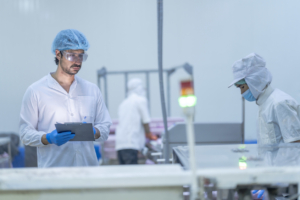
Sterile processing technicians have important duties and have an integral role in health care teams.
Patients usually do not come in direct contact with patients, yet their duties help to ensure the patients’ health and safety.
Cleaning, disinfecting, and decontaminating medical and surgical equipment, tools, and surfaces are the responsibility of sterile processing technicians.
They also inspect medical instruments for damage or to see if they have any debris on them.
Sterile processing technicians are responsible for assembling instrument trays that are used in surgical procedures.
They work with surgeons and other members of surgical teams and healthcare professionals to maintain a sterile environment during surgeries or other medical procedures.
Sterile processing technicians are sometimes called by other job titles.
Some employers or states may refer to them as central processing technicians, or as sterile processing and distribution technologists.
The role of sterile processing technicians is vital in hospitals, outpatient surgery centers, clinics, and some other medical facilities.
The responsibility that they have is why some states have decided to require them to meet certain standards.
Some states may require them to have a license.
Some other states may require them to have a certification, or they may have to complete an education or training program to work in certain states.
States That Require Sterile Processing Technicians to Have a License
None of the states in the U.S. requires sterile processing technicians to have a license.
Central processing technician legislation worked its way through some states but never made it into law.
The licensing of sterile processing technicians in the states may take place at some time in the future.
One state requires some sterile processing technicians to have another type of license.
That state is New Jersey.
The state does not have general requirements for sterile processing technicians to have a license.
What it does require is that sterile processing technicians who use ethylene oxide must have a license to use it.
The license must come from the New Jersey Department of Environmental Protection.
Arizona
The state of Arizona looked at placing requirements on surgical technicians several years ago.
The proposed legislation did not pass out of the committee.
Colorado
The state of Colorado proposed legislation that would require sterile processing technicians to meet certain standards.
The bill stalled in 2020.
There has been no further action to require sterile processing technicians to have a license or certification.
Georgia
Georgia is another state that does not have license requirements for its sterile processing technicians.
They only have the requirement that the sterile process service must be staffed by qualified personnel.
The state has no license or certification requirements to determine who meets the state standards for qualified personnel.
Illinois
Some areas in Illinois have one of the largest levels of employment for sterile processing technicians.
The Chicago area is one of those regions.
Yet, the state does not require its sterile processing technicians to have a license or a certification.
Michigan
The state of Michigan does not require sterile processing technicians to have a license.
The state only limits access to certain spaces to those employees who are working in a sterile environment.
Ohio
Some groups in the state of Ohio started lobbying to set standards for sterile processing technicians as recently as 2024.
There is still no license or certification required for sterile processing technicians who work in the state.
States That Do Not Require a License but Mandate Certification or Training
Several states require sterile processing technicians to have a certification.
The process for certification varies among the states.
Some states may require sterile processing technicians to have a certification and to complete other requirements to maintain their certification.
They may have to complete an education or training program to work in certain states.
Another example is that they may have to complete a certain number of continuing education hours or credits each year.
The Healthcare Sterile Processing Association (HSPA) explains that earning a certification helps to make sure that sterile processing technicians have and maintain the knowledge and skills that they need for performing and managing their duties.
The certification helps them to do so safely, effectively, and consistently.
They also say that by completing the required continuing education requirement every year, sterile processing technicians can learn and use ever-evolving technologies.
They can also maintain the best practices and standards to help their department operate at its best performance.
The following states require sterile processing technicians to earn a certification.
The states may also have other requirements.
Connecticut
Connecticut is one of the states that uses the job title of Central Service Technician, rather than Sterile Processing Technician.
The state law that mandates certification for people who work in this profession went into effect in January 2016.
House Bill 5913 made an exemption for people who were already working as sterile processing technicians before the law went into effect.
Central Processing Technicians must earn their certification from one of two entities.
One choice is to get certification from the International Association of Healthcare Central Service Material Management.
Another option is to obtain certification from the Certification Board for Sterile Processing and Distribution, Inc.
Central service technicians must also complete at least 10 hours of continuing education each year.
Delaware
The state of Delaware allows people to start working at a hospital, surgical center, clinic, or another type of healthcare facility without having a certification.
They must earn a certification within 18 months of being hired at a hospital, surgical center, or other type of facility.
The state enacted House Bill 279 in 2023.
People who were already working as sterile processing technicians were not affected by the new law.
New Jersey
The state of New Jersey is another example of a state that uses the job title Central Service Technician, rather than Sterile Processing Technician.
New Jersey has several requirements for central service technicians.
One requirement is that they must have a certification within three years of employment.
They must also complete annual testing that is conducted by a supervisor or by the Director of Central Services.
The law for this state also requires that new-hire sterile processing technicians shall receive on-the-job training that is unique to that specific hospital or facility.
New York
People who want to work as sterile processing technicians in New York must earn a certification as a registered central service technician, a sterile processing technician, or a distribution technician.
People who start a job without having a certification must earn the certification within 18 months of employment.
Students are allowed to work in the sterile processing technician career field so long as a certified employee supervises their work.
They must not perform any duties that extend beyond educational requirements.
The state requires sterile processing technicians to complete at least 10 hours of continuing education each year.
Pennsylvania
The state of Pennsylvania Central Service Technician and Surgical Technologist Regulation Act of 2020 set the certification requirements for sterile processing technicians who work in the state.
Sterile processing technicians must already hold a certification or earn one within 18 months of their employment.
They must also complete the required 10 hours of continuing education every year.
Tennessee
Tennessee allows people to start working as sterile processing technicians even if they do not have their certification.
The state requires them to earn certification within two years of employment.
They must also complete at least 10 hours of continuing education each year to maintain their certification.
Two states have had pending action that would require sterile processing technicians to have certification.
The pending laws have not yet taken effect. Some of them may not actually become laws.
Florida
The state of Florida had two bills that went to the state senate as recently as 2022.
Both were removed from consideration.
There is no pending legislation as of December 2025.
Massachusetts
Some members of the Massachusetts state government tried to push for requirements for sterile processing technicians to have certification.
The legislation has never made it past the proposal stage.
States With No License Requirement but Employer-Based Standards
Any employer who hires sterile processing technicians can set their own employer-based standards.
Those standards cannot be anything that disregard the state laws for licensing or certification.
Some employer-based standards may also be included in the regulations of states that have certification requirements for sterile processing technicians.
It is the responsibility of current and future sterile processing technicians to know if there are any employer-based standards in the state where they want to work or at hospitals or other facilities that hire sterile processing technicians.
They should check with every employer where they want to work before applying.
People who want to work as sterile processing technicians should make sure that they comply with all other requirements, such as certification, completing their background checks, and completing the required education program.
Schools across the country offer sterile processing technician programs.
Anyone who plans to enroll in a sterile processing technician program needs to make sure that it meets the employer-based standards.
Some employers may only require that students complete a certificate program.
Some other employers may require them to complete a longer program, or one that leads to certification.
People who want to work as sterile processing technicians who do not complete and comply with state licensing, certification, and employer-based standards may find that they cannot get a job.
It can make a difference between getting or keeping a sterile processing technician job.
Some schools explain that it can be hard to get a sterile processing technician job if you do not know the medical terminology, the instruments, or processes that are required in this field.
Future sterile processing technicians need to comply with employer-based age, education, certification, and other requirements.
They should look for and understand the employer-based standards before they apply to a hospital, surgical center, private practice, or any other place that hires sterile processing technicians.
A couple of states list their employer-based standards for their sterile processing technicians.
Hawaii
The state of Hawaii does not require sterile processing technicians to have a license.
The state also does not require them to have a certification.
Employers who hire sterile processing technicians may require them to comply with their own employer-based standards to get a job.
Some examples include things like completing an education program that has accreditation from a recognized body.
They may require sterile processing technicians to continue certain training or education requirements to maintain their employment.
New York
New York has certification requirements, but no license requirements for sterile processing technicians.
Employers who hire sterile processing technicians require them to have at least one year of experience within the past four years.
Sources
https://www.steriletechprograms.com/license-requirements-by-state/
https://myhspa.org/about/advocacy/legislative-certification-issues/