


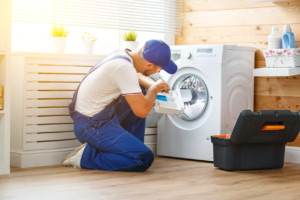
Appliance repair technicians keep households and businesses running by installing, maintaining, and repairing appliances.
A workday might include diagnosing blown fuses, troubleshooting dead motors, and resuscitating machines.
Statewide — Why No “Appliance Repair License,” and What That Means
In every U.S. state, from Alabama to Wyoming, the same basic fact holds: there is no statewide license requirement specifically for “appliance repair technician.”
Instead, regulation is either absent for simple plug-in appliances or is split between other trades when jobs involve gas lines, electrical wiring, HVAC, or refrigerants.
What differs from state to state is mainly the market conditions, trade culture, and local business-license practices, not a formal credentialing mandate.
Some cities impose contractor rules, some regions layer on electrical or HVAC requirements, and employers maintain their own expectations — especially when refrigerants or built-in wiring/gas are involved.
Why There Are Effectively No States Requiring Licensure — But What Technicians Still Need to Know
Given that no state issues a dedicated “appliance repair technician license,” it might seem like the trade is under-regulated.
However, layers of oversight and practical expectations make the field gear up and run smoothly:
- Federal regulation for refrigerants. Whenever a repair involves refrigerants — for example, refrigerators, freezers, air-conditioning units, or refrigeration-based appliances — the technician must comply with the federal U.S. Environmental Protection Agency (EPA) Section 608 Technician Certification Requirement under the Clean Air Act.
- Trade-based regulation for related work. If an appliance repair involves gas lines, built-in wiring, plumbing, HVAC — tasks that fall under other regulated trades — then licensed electricians, plumbers, HVAC techs, or general contractors must handle those parts.
- Employer expectations and industry standards. Many service companies, especially those working on refrigerators, freezers, or HVAC-related appliances, require technicians to hold EPA 608 certification or similar credentials (manufacturer training, safety courses, etc.) regardless of state law.
- Local business regulations. Even if the state doesn’t license appliance repair, local jurisdictions often impose business license, permit, or insurance requirements — especially for independent contractors.
So while “uncertified techs” can legally perform many appliance-repair tasks, the reality is that competent, reputable, and lawfully compliant technicians almost always have: federal refrigerant certification, business registration (if independent), insurance or bonding, and, where necessary, access to licensed trades for electrical, gas, or structural work.
Best Practices for Aspiring Appliance Repair Technicians
For candidates considering a career in appliance repair:
- Obtain EPA 608 certification — Even if you only plan to work on plug-in appliances, having this federal credential adds credibility, especially if you ever branch into refrigeration or HVAC-adjacent work. It’s nationally recognized and doesn’t expire.
- Understand trade overlap. Know when a job requires a licensed electrician, HVAC technician, plumber, or general contractor — and build relationships accordingly, and consider subcontracting or partnering with other providers.
- Register your business if you work independently. Most local jurisdictions require some form of business registration, tax ID, or occupational license for home-service contractors.
- Get liability insurance/bonding. Many clients and service companies expect technicians to carry insurance. Even when not legally required, it builds trust and protects against potential damages.
- Stay updated on refrigerant laws. Because refrigerant types change (e.g., HFCs, HFOs, new regulations on leak testing or disposal), stay up to date on EPA updates and ensure your certification remains valid under evolving rules.
- Invest in ongoing training. While many states don’t mandate continuing education, voluntary training — whether manufacturer-based, trade-school courses, or safety workshops — can improve service quality, reduce liability, and help technicians stand out.
- National Appliance Service Technician Certification (NASTeC): Among the most respected appliance repair certifications from the International Society of Certified Electronics Technicians (ISCET).
States That Do Not Require Licensure but Mandate Certification or Training
Alabama
The state does not directly regulate appliance repair technicians.
Technicians often enter the field via vocational training, manufacturer-based courses, or on-the-job experience.
For everyday tasks — such as replacing a dryer belt or repairing a washing machine timer — no license is required.
If a job involves wiring or built-in electrical work, local electrician codes may apply, but for plug-in appliances, Alabama leaves things open and accessible.
Alaska
Alaska has no statewide “appliance repair license.”
Many technicians combine appliance work with general handyman or electrical tasks, but formally, there’s no credential required.
Arizona
Arizona does not license appliance repair technicians statewide.
In practice, many technicians work under the umbrellas of general contractors or business registrations.
Because refrigeration is standard (especially in hot climates with high AC use), some employers encourage training in refrigerant or HVAC systems.
Arkansas
General maintenance and appliance repair are unregulated at the state level.
Many repair shops rely on employer-based training, manufacturer credentials, or simply hands-on experience.
For tasks outside plug-in appliance repair (electrical wiring, gas stove hookups, built-ins), electricians/plumbers or licensed tradespeople must be involved.
California
The Golden State requires a license for services valued over $1,000 as of 2025, including labor and materials.
The law stipulates that unlicensed work must be “casual, minor, and inconsequential.”
General handyperson tasks, like fixing furniture or simple repairs, are exempt, though local business licenses are required.
If a job requires a permit or involves complex trades, a license is mandatory.
Colorado
Colorado doesn’t regulate appliance repair technicians statewide.
Technicians enter the business through vocational routes or on-the-job learning.
Local business permits may be required for independent contractors, but those are unrelated to appliance-repair certification.
Electrical, plumbing, or HVAC tasks must adhere to their respective licensed-trade rules, but basic plug-in appliance repair remains unlicensed and open.
Connecticut
There’s no license requirement for appliance repair in Connecticut.
However, when repair work involves electrical wiring, built-in appliances, HVAC, or gas systems, relevant licensed trades take over.
For standard home appliances, employers usually care more about experience and reliability than formal credentials.
Delaware
Appliance repair remains unlicensed and deregulated at the state level in Delaware.
Technicians often come through vocational routes or are trained in-house by service companies.
Many firms recommend federal refrigerant certification for firms that handle refrigerators or AC units, but this is an employer-driven requirement, not a state mandate.
District of Columbia/Washington, D.C.
No specific license for appliance repair.
Technicians must comply with general business registration requirements and, in some cases, building or property management regulations, especially in multi-unit housing.
Florida
The state does not issue a statewide appliance-repair license.
Instead, regulation is often handled at the county or city level, primarily when individuals operate like contractors or service companies.
Independent technicians typically must secure a business or occupational license for tax and insurance purposes.
For work involving refrigerants, federal certification applies.
Georgia
Georgia does not mandate an appliance-repair license at the state level.
Plug-in appliance repair falls under general consumer service norms, while the relevant trade boards regulate specialized tasks (gas, HVAC, built-ins).
Hawaii
No statewide license for appliance repair exists.
Independent technicians often have to handle local business registration or permit requirements, but not specific trade licensing for plug-in appliances.
Refrigerant or HVAC work triggers federal or trade-specific regulations.
Idaho
Appliance repair remains unregulated statewide.
Many technicians rely on on-the-job experience, manufacturer-provided training, or self-taught skills.
Electrical or gas work associated with appliance repair remains under licensed trade regulations, but standard maintenance is open.
Illinois
There is no state-level license for appliance repair.
Technicians enter the field through vocational schools, manufacturing programs, or apprenticeships.
For work involving electricity, gas, or refrigeration, appropriate licensed trades or federal certifications apply.
Indiana
In Indiana, there’s no requirement for a special appliance-repair license.
Entry typically comes via hands-on work, employer training, or introductory vocational courses.
When the work overlaps with plumbing, electrical, gas, or HVAC, licensed professionals handle that portion.
Iowa
Iowa does not issue appliance-repair licenses.
Technicians are generally free to work on plug-in appliances without state credentials.
As always, electrical, plumbing, HVAC, and refrigeration-related work remains under trade-specific rules.
Kansas
In the Free State, no statewide license is needed for basic appliance repair.
Repair shops often hire technicians with practical skills or optional certifications.
For more complex tasks involving gas, electrical, or built-in units, licensed trades must be involved; basic appliance fixes remain unregulated.
Kentucky
Kentucky does not require appliance repair to be licensed at the state level.
Many technicians build careers through hands-on training or employer-based mentoring, rather than formal credentials.
For jobs that involve wiring, gas, HVAC, or built-ins, licensed trades apply.
Louisiana
Appliance-repair licensing does not exist at the statewide level.
Technicians generally obtain work based on experience, customer referrals, or employer training.
Refrigeration or HVAC work triggers federal rules, but standard washer, dryer, or oven repairs stay unregulated.
Maine
No license is required for appliance repair.
With a mix of rural and coastal communities, many technicians operate independently—performing plug-in appliance repairs without formal credentialing.
As elsewhere, gas, electrical, or HVAC work relies on licensed trades.
Maryland
The state does not license appliance repair technicians.
Home service companies often prefer candidates with some background in appliance maintenance or general electrical know-how, but no state-issued license is required for everyday tasks.
Regulations apply only when refrigerants, gas, or wiring are involved.
Massachusetts
Appliance repair remains unlicensed statewide.
Technicians’ employability often depends on experience, reputation, or employer-provided training rather than on a formal license.
Specialized tasks such as HVAC, gas, or built-in appliance installation still require licensed tradespeople.
Michigan
The Wolverine State has no statewide requirement for an appliance repair license.
Many repair companies operate under general business registration and insurance.
When jobs involve wiring, plumbing, or HVAC, licensed trades are called in.
Minnesota
Appliance repair remains entirely unregulated by the state with respect to licensing.
Technicians begin work via on-the-job learning, brief training, or manufacturer-led courses.
More complex jobs — such as refrigeration, gas, and electrical — are handled by licensed professionals.
Mississippi
In Mississippi, no statewide appliance-repair credentials are required.
Technicians often learn through apprenticeships or employer training, relying mainly on practical expertise and customer feedback.
For anything beyond basic appliance repair, trade licenses apply.
Missouri
The Show Me State doesn’t issue licenses for appliance repair technicians.
Standard practice involves hiring technicians with informal skill sets or offering on-the-job training.
Refrigeration, HVAC, electrical, or plumbing components trigger relevant licensed-trade requirements.
Montana
Appliance repair remains unregulated in Montana.
Technicians commonly work independently or for small businesses, with licensing reserved for included trades (electric, gas, HVAC) when necessary.
Nebraska
No license requirement exists for appliance repair statewide.
Technicians often rely on experience, apprenticeship, or optional manufacturer training.
For jobs involving wiring, plumbing, or refrigerants, relevant trade licensing or federal certification applies.
Nevada
Appliance repair falls outside statewide licensing.
Technicians may be required to register as a business or contractor depending on local laws, but standard maintenance remains unlicensed.
Refrigerant-related repairs must meet federal standards.
New Hampshire
No appliance-repair license is required in the Live Free or Die State.
Many technicians operate as general household-repair contractors or independent handypersons, with trade-licensed partners stepping in when needed.
New Jersey
New Jersey does not license appliance repair technicians directly.
Many repair firms prefer technicians with experience or in-house training.
For work involving refrigerants, wiring, or gas, a licensed electrician, HVAC tech, or plumber must be employed.
New Mexico
Appliance repair remains unlicensed at the state level in New Mexico.
Technicians often rely on vocational background or employer training.
If the job involves wiring, gas, HVAC, or refrigeration, separate licensed trades or federal certification apply.
New York
No statewide license is needed for appliance repair in New York.
In city areas, many companies require proof of insurance, basic electrical knowledge, or safety certification.
North Carolina
Appliance repair technicians do not need a special state license in North Carolina.
Many start with on-the-job learning.
Electrical, plumbing, gas, or HVAC tasks are regulated under their own trade licensing systems, but simple appliance repair remains open.
North Dakota
In North Dakota, there’s no license requirement for appliance repair.
Independent technicians or small businesses commonly operate with minimal regulatory burden, as long as their work falls outside regulated trades like electrical, plumbing, or HVAC.
Ohio
Ohio is widely regarded in the trade community as “hands-off” when it comes to appliance repair.
Technicians can work on plug-in appliances without licensing, though if they handle refrigerants, wiring, or gas, they must involve licensed professionals.
Oklahoma
It’s okay — there’s no statewide license requirement for appliance repair in Oklahoma.
Many small towns rely on general contractors or handypersons to service appliances.
Specialized tasks — HVAC, wiring, gas — still require licensed trades.
Oregon
In Oregon, appliance repair remains outside statewide licensing.
Independent service providers often register as businesses, but the repair work itself is unlicensed unless it overlaps with a regulated trade.
Pennsylvania
Pennsylvania doesn’t credential appliance repair technicians.
Most repair businesses rely on employer-driven training, experience, or optional certifications.
Regulated work involving refrigerants, gas, HVAC, or wiring is performed by licensed tradespeople.
Rhode Island
In Rhode Island, there’s no state-level appliance repair license.
Technicians often rely on skill, training, and references.
For any work involving refrigerants or structural appliance installation, federal or local trade regulations apply.
South Carolina
Appliance repair remains unregulated in South Carolina.
Many technicians enter the field through vocational programs, while businesses may be required to obtain general liability insurance or register with the state.
More technical or hazardous tasks go to licensed trades.
South Dakota
No statewide credential is required.
Technicians commonly perform basic repairs independently.
Complex tasks involving wiring, gas, HVAC, or refrigeration require relevant licensed specialists.
Tennessee
Appliance repair is unlicensed in Tennessee.
Independent technicians or small companies provide many repair services.
If a job involves refrigerants, wiring, or built-in systems, the relevant trade licensing rules take over.
Texas
Texas does not require a statewide “appliance repair technician license” for standard plug-in appliance repair.
However, for built-in appliances, HVAC, refrigeration, or gas/electrical work, contractors or trade-specific licensing (e.g., from the Texas Department of Licensing and Regulation when relevant) may apply.
Many businesses require certification or proof of insurance for those tasks.
Utah
Utah issues no appliance-repair license.
Independent technicians generally operate with minimal regulation.
When jobs overlap with HVAC, plumbing, gas, or electrical — licensed trades apply.
Vermont
Appliance repair remains unlicensed statewide in Vermont.
Many technicians operate as general home-service providers or handypersons.
For regulated tasks involving refrigerant, wiring, or gas, licensed professionals are required.
Virginia
Virginia doesn’t mandate a license for appliance repair technicians.
Service providers often rely on vocational background or in-house training.
Any repair involving HVAC, gas, or wiring triggers licensed-trade regulations.
Washington
There’s no state-level appliance repair license.
However, jobs involving hard-wired electrical appliances or installations may require an electrical permit, especially in cities.
General plug-in appliance repair remains unregulated.
West Virginia
Appliance repair is unlicensed in the Switzerland of America.
Technicians generally work independently or for small businesses.
As always, tasks that encroach on electrical, gas, HVAC, plumbing, or refrigeration are regulated through relevant licensed trades.
Wisconsin
The state does not require an appliance-repair license.
Technicians enter the field via experience, training, or employer-based instruction.
Refrigerant, wiring, or gas tasks fall under separate trade regulations.
Wyoming
There’s no statewide licensing in the Equality State.
Independent appliance repair services operate based on experience and voluntary training.
Licensed trades are only required when the work involves wiring, gas, HVAC, or refrigeration systems.