


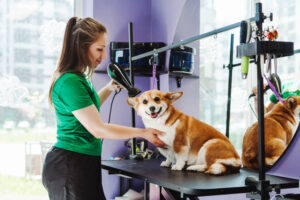
Pet grooming offers a fulfilling and creative career path for animal lovers.
The role provides variety, flexibility, and steady demand in many communities.
Groomers offer a range of services for furbabies, from general care to primping and styling.
For those who specialize, advanced services are possible.
Some groomers add value by pet sitting, offering customized accessories, or providing a mobile unit for extra convenience.
So, whether it is a summer or second job or the challenge of starting and growing a small business, consider a few pros and cons of being a pet groomer to better understand what to expect in this dynamic role.
Pros of Being a Pet Groomer
1. Furry Hugs And Pay
Pet groomers work in an environment where furry hugs are part of the package.
Every day is rewarding, filled with wagging tails, curious sniffs, and that moment when the four-legged client begins to trust.
Pet groomers actively help pets feel and look their best.
For animal lovers, this career offers emotional satisfaction plus a paycheck.
2. Four-Year Degrees Are Optional
Certification as a pet groomer does not take years in college or thousands of dollars in student debt.
Many training programs are affordable, hands-on, and can be completed in months, not years.
There are also a few online programs that offer the basics and work well when combined with an apprenticeship.
Pet groomers can also take specialty courses.
These focus on the needs of a particular animal species.
High-end grooming for dog or cat shows or even equestrian competitions can be rewarding.
Pet grooming is a great transition or part-time career, but it can also be a long-term profession.
3. Infinite and Daily Variety
Routine isn’t a thing in pet grooming.
No two pets or pet parents are the same.
In one day, a schedule can include styling a diva poodle, patiently calming a jittery rescue dog, or helping a cat conquer its fear of water.
Variety can be energizing (and exhausting).
But it also requires the ability to read animals, adapt techniques, and think on the fly.
4. Flexible Work Environment Options
Pet groomers work wherever they are needed.
This includes salons, vet clinics, big-box pet stores, mobile grooming vans, or a trendy new home grooming studio.
In larger cities, animal clinics and veterinary offices may employ pet groomers to complement their medical services.
Many groomers enjoy the freedom to choose hours that suit their lifestyles.
This can be a full-time, part-time, or weekend gig.
This flexibility allows control over work-life balance, especially appealing to chaotic or independent lifestyles.
5. Professional Growth and Training
Pet grooming and animal care – a stable, if not growing, profession.
It is fueled by the rise in pet parents treating pets as family.
Pet owners are investing more in their animals’ hygiene and appearance.
They are also investing in pet trackers and accessories.
This means pet grooming skills will remain relevant, providing job security and creative opportunities in small towns and big cities.
People will always need a reliable groomer.
This kind of industry resilience is a big plus, especially in uncertain economic times.
6. Fur-centric Creativity and Style
Some argue that pet grooming isn’t just about shampoo and scissors.
They are right!
Grooming is a true art form that can be practiced daily.
Pet care artists can perfect the breed-standard cuts or develop imaginative designs with bows and sequenced collars as accessories.
They can even suggest a functional tracking collar for additional pet safety.
It is fur-centric styling, meant to enhance each pet’s unique charm and personality.
Even routine grooms can involve creative problem-solving when it comes to coat texture, behavior, or health needs.
7. Community Inclusion and Recognition
Pet groomers are a recognized part of the community.
Over time, they build relationships with pets and families, creating loyalty and trust.
Pet parents prefer professionals who care for their animals and recognize when pets are safe.
Client confidence in a groomer’s talent and reliability is often rewarded by word-of-mouth referrals and repeat business.
Cons of Being a Pet Groomer
1. Physical Work and Stamina
Pet grooming isn’t a sit-down job.
It includes hours of standing, lifting heavy animals, bending over bathtubs, and holding pets steady.
These repetitive actions take a toll on the back, shoulders, and even wrists.
Water, fur, and cleaning chemicals are also part of the job.
While grooming can be rewarding, it’s not for those looking for an easy job.
A strong body and good stamina are must-haves.
2. Uncooperative Pets and Challenges
Pets can be quiet and loving in their home environments.
However, a trip to the groomer can be stressful.
Some are anxious and may lash out, making a care session unpredictable and occasionally dangerous.
Even the most seasoned groomers face challenges with behavioral issues.
It takes patience and a wide variety of techniques to handle difficult animals.
Dealing with stressed-out pets can be emotionally draining, too.
Being calm under pressure is a valuable skill, without which this job can feel overwhelming.
3. Plan for Inconsistent Income
At first, income from pet grooming is unpredictable.
There can be slow times and last-minute cancellations, leading to sporadic weekly paychecks.
It takes time to build a solid client base with loyal customers.
Budgeting and financial planning, even as an employee in a large pet salon, are essential when pursuing grooming as a full-time career.
4. Pets Are Messy Work
Furbabies are adorable, but let’s be honest, pet grooming isn’t exactly glamorous.
New or experienced groomers deal daily with shedding fur, muddy paws, stinky coats, fleas, and the occasional…accident.
Bathing large, squirmy dogs or trimming nails on a terrified cat can be frustrating and messy.
Plus, cleanup never ends—tools need sanitizing, tables need wiping, and hair gets everywhere.
For those who prefer pristine workspaces, with everything clean and orderly, this career might test your tolerance.
5. Emotional Burnout Is Real
Emotional and physical burnout is a real risk for pet groomers.
Caring for animals all day might seem emotionally uplifting.
But it also comes with stress.
Seeing neglected animals or dealing with the sudden loss of a beloved pet client can be overwhelming.
And for those who are truly empathic, trying to soothe the fear of a scared kitten in your care can be draining.
Staying on schedule and managing the expectations of pet parents can contribute to working long hours.
Groomers often put the pets’ needs before their own, which can backfire if boundaries aren’t in place.
6. Constant Learning and Training
The professional world of pet grooming is constantly evolving.
Just like hair and fashion styles for humans, new grooming tools and trendy puppy styles are almost a yearly occurrence.
The veterinary profession constantly reviews animal safety handling techniques to ensure pets and people are safe, happy, and healthy.
And some states have enacted regulations and licensing requirements to guarantee that pet groomers have current training.
The best way to stay competitive and compliant is to keep learning.
Workshops, certifications, and online courses are all educational.
They also provide professional networking options.
Training also helps to stay current on breed standards, coat types, and product safety.
While some people thrive on lifelong learning, others might find this aspect stressful.
Like most professions, excellence takes a lifelong commitment.
7. Pet Parents Can Be Difficult
Managing human expectations is one of the toughest parts of the job.
Most pet parents are kind and appreciative.
But others can be demanding, unrealistic, or downright rude.
This usually happens when expectations and the pet’s condition or temperament are misaligned.
For instance, conflict could arise when owners drop off a pet with severely matted fur and expect instant miracles.
Effective communication skills are essential.
However, even the most skilled professional can’t defuse all situations.
Handling complaints adeptly, setting boundaries, and educating clients requires a thick skin and excellent people skills.
It’s not just about grooming pets.
It is about managing humans, too.
Pros and Cons of Being a Pet Groomer – Summary Table
| Pros of Being a Pet Groomer | Cons of Being a Pet Groomer |
|---|---|
| 1. Furry Hugs and Pay | 1. Physical Work and Stamina |
| 2. Four-Year Degrees Are Optional | 2. Uncooperative Pets and Challenges |
| 3. Infinite and Daily Variety | 3. Plan for Inconsistent Income |
| 4. Flexible Work Environment Options | 4. Pets Are Messy Work |
| 5. Professional Growth and Training | 5. Emotional Burnout Is Real |
| 6. Fur-centric Creativity and Style | 6. Constant Learning and Training |
| 7. Community Inclusion and Recognition | 7. Pet Parents Can Be Difficult |
Should You Become a Pet Groomer?
Being a pet groomer is a rewarding career.
The job offers daily variety and emotional fulfillment for animal lovers who enjoy hands-on, caring work.
Additionally, pet groomers can choose to specialize by breed or species – cats, dogs, or even horses.
However, being a pet groomer is not without its challenges.
Pet grooming is physical, and the unpredictability of pets and their parents can take a toll.
Pet grooming, regardless of animal specialty, requires patience.
Successful groomers balance artistic skill with a lifelong commitment to continuous learning.
And regardless of the grooming environment, business expertise is a plus.
Ultimately, pet grooming is more than just fluff and fur.
It is a dynamic career that combines heart, hustle, expertise, and resilience.
If you love animals and can handle the mess and stress, this career path is worth exploring.