


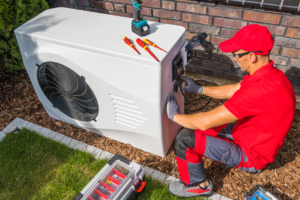
If you’re considering becoming an HVAC technician, a major consideration must be the licensing process in your state.
Unfortunately, there is no federal mandate, as this is managed at the state level and, in many instances, at the county or city level.
Before jumping into becoming an HVAC technician, it’s essential to understand the requirements for your state.
Keep reading to learn more!
States Requiring an HVAC Technician License
Alabama
The Alabama Board of Heating, Air Conditioning, and Refrigeration Contractors mandates licensure of HVAC Technicians to work in the State.
Candidates are eligible to sit for the licensure exam if they have a State-issued apprenticeship certificate, transcripts proving graduation from a training program, or proof of 18 months of experience with a licensed contractor.
Once the HVAC Technician has passed the exam, they must apply for active certification.
This includes a $20,000 performance bond and a fee.
Alaska
The State of Alaska requires contractors to be licensed under the term ‘Mechanical Administrators.’
There are several categories for this license, including:
- Heating, cooling, and process piping
- Mechanical systems temperature control
- Residential HVAC
- Residential plumbing and hydroponic heating
- Unlimited HVAC/sheet metal
- Unlimited refrigeration
Arizona
The Arizona Registrar of Contractors mandates HVAC employees to hold a license before starting any work.
To qualify for the license, applicants must have four years of HVAC specialty experience in the field of licensure or graduation from an apprenticeship or training program, plus two years of experience.
Candidates must also hold a surety bond, have proof of workers’ compensation insurance, be registered with the Arizona Corporation Commission, and pass the business management and trade exam.
Arkansas
The Arkansas Department of Labor and Licensing regulates all required HVAC/R contractor licenses, of which there are five types (Class A-E).
Candidates must first be pre-approved by the Licensing Board to sit for the exam and must show 2 years of experience in the field.
The Board requires all HVAC business licenses to be renewed annually.
California
All HVAC contractors who wish to work in California on jobs worth more than $500 must hold a license issued by the Department of Consumer Affairs Contractors State License Board.
To become licensed, applicants must pass a business and law exam and a trade exam.
To qualify, candidates must have four years of experience in the HVAC field within the past decade.
Also, you must show proof of workers’ compensation and liability insurance and hold a $25,000 contractor license bond.
Connecticut
The Department of Consumer Protection requires HVAC professionals to hold a license for all jobs.
The State offers 21 cooling, piping, and heating license types for specific areas of work.
The most common is a journeyman’s license, which mandates candidates to pay a fee, pass an exam, and have completed a registered apprenticeship program.
Contractors can acquire licensure by showing proof of two years of experience as a journeyman, passing an exam, and completing a law and business exam.
Delaware
The State of Delaware requires HVAC contractors to acquire a license.
The State has two types: a Master HVACR Restricted license for one specialty, and a Master HVACR license for more than one specialty.
Florida
The Department of Business and Professional Regulation requires all HVAC professionals to work to earn a license.
The options are Class A and B for certified contractors, and Class A and B for registered contractors.
A certified license allows HVAC technicians to work across the state, whereas a registered license permits working in specific jurisdictions.
Georgia
The Georgia State Board of Conditioned Air Contractors requires HVAC contractors to hold a restricted Class I or unrestricted Class II license.
The Class I license requires candidates to have four years of experience, while the Class II license requires at least five years of experience.
An education program can be applied to both licenses and experience.
Hawaii
Although the Hawaii Department of Commerce and Consumer Affairs does not require HVAC technicians to hold a license, they must acquire one with specific classifications to conduct HVACR work.
This is a specialty license for this type of specialized work.
Idaho
The Idaho Division of Building Safety requires any individual working in the HVAC industry to acquire a license.
There are two types of HVAC licenses: contractor and specialty contractor.
Both licenses require candidates to pass an exam and show proof of at least 24 months of experience.
Iowa
The Iowa Department of Inspections, Appeals, and Licensing requires all HVAC workers to be licensed.
There must always be a master level technician on-site, and candidates must show a place of business and proof of insurance.
Kentucky
Kentucky HVAC contractors are licensed through the Department of Housing, Buildings, and Construction.
To be eligible, candidates must hold a Journeyman Mechanic license for two years and be directly supervised by a Master HVAC contractor.
Other requirements include passing trade and business and law exams and holding general liability insurance.
Louisiana
The Louisiana State Licensing Board for Contractors mandates HVAC contractors have a mechanical license for projects over $10,000.
Licensure includes passing business and law, trade exams, and proof of apprenticeship or classroom training.
Maryland
The Department of Labor, Licensing, and Regulation licenses HVAC contractors in Maryland.
The Department has three licenses: Limited HVACR Contractor, Master HVACR Contractor, and Master Restricted HVACR Contractor.
All licenses require passing a related examination and are differentiated by the amount of experience the candidate has.
Michigan
Michigan HVAC contractors require a mechanical contractor license from the Department of Licensing and Regulatory Affairs.
Within the license, there are ten classifications from which to choose based on your specialization.
To earn the license, you must pass the exam and prove three years of experience in each work classification for which you want to be licensed.
Mississippi
The Mississippi State Board of Contractors requires HVAC personnel to hold a license if working on projects larger than $10,000.
For projects under $10,000, no statewide licensure is mandated, but it could be required within local jurisdictions.
Those working in refrigeration must hold an EPA certification.
Nevada
HVAC contractors working in Nevada must acquire a state license.
Those in the HVAC industry will pursue a Class C specialty license, which has 36 classifications.
The most relevant licensing classifications are C-1 Plumbing and Heating Contracting and C-21 Refrigeration and Air Conditioning.
New Jersey
The New Jersey Division of Consumer Affairs requires HVAC contractors to hold a license before working in the State.
To apply, candidates must show a combination of education and work, including one of these requirements:
- A four-year bachelor’s degree from an HVACR-accredited institution and one year as a journeyman.
- A four-year bachelor’s degree in an HVACR-related field from an accredited institution and three years as a journeyman.
- A two-year degree from an institution following an approved apprenticeship, and one year as a journeyman.
- One year as a journeyman and completion of an apprenticeship program.
New Mexico
The New Mexico Regulation and Licensing Department requires HVAC contractors to hold a state license.
To be eligible, candidates must have proof of two years of experience, submit proof of a bond, and pass a law and business, and trade exam.
North Carolina
North Carolina mandates that HVAC contractors hold a state license.
Applicants either need a heating and cooling license from the State Board of Examiners of Plumbing, Heating, and Fire Sprinkler Contractors or a refrigeration contractor license provided by the State Board of Refrigeration Contractors.
4,000 hours of work experience is required, but technical training can substitute up to half the amount.
Applicants must also pass a licensing exam.
North Dakota
North Dakota does not mandate HVAC professionals to hold a license for projects under $4,000.
Those over that amount need a North Dakota Secretary of State-issued license by showing proof of business insurance and applying.
Ohio
The Ohio Construction Industry Licensing Board issues an HVAC contractor license.
To be eligible, applicants must prove five years of experience as a technician, followed by proof of liability insurance.
Oklahoma
The Oklahoma Construction Industries Board issues mechanical contractor licenses to HVAC professionals.
To earn the license, candidates must have proof of four years of experience in HVAC or a combination of education and experience, proof of business liability, and pass an exam.
Oregon
The Oregon Construction Contractors Board has several license options for HVAC contractors, split between large commercial, small commercial, and residential.
Each option has test, training, and experience requirements.
Rhode Island
Rhode Island has a variety of HVAC contractor licenses, including:
- Contractor master – pipefitting, refrigeration, or sheet metal
- Master mechanical contractor
- Pipefitter master contractor – Class I and Class II
- Refrigeration master – Class I and Class II
- Sheet metal master contractor – Class I and Class II
South Carolina
The South Carolina Department of Labor, Licensing, and Regulation mandates that all HVAC contractors hold a state mechanical contractor license.
There is also a specialty HVAC residential contractor license available.
Tennessee
The Board for Licensing Contractors requires HVAC professionals to hold a state license when working on projects over $25,000.
Journeyman and master-level licensure is processed at the local levels.
The two state licenses include a full mechanical contractor license and a mechanical HVAC contractor license.
Texas
The Texas Department of Licensing and Regulation mandates HVAC contractors to hold a state license.
To qualify, candidates must have four years of experience working under a licensed HVAC contractor or a technical certification within the past 12 months, with three years of experience.
Utah
The Utah Division of Occupational and Professional Licensing issues HVAC contractor licenses.
Candidates must take a 25-hour pre-license course and show proof of insurance to apply.
Virginia
The Virginia Department of Professional and Occupational Regulation issues HVAC contractor licenses.
These are only available for those who hold the HVA license.
If eligible, candidates can choose from Class A, five years of work, Class B, three years of work, or Class C, two years of work.
Washington
The Washington State Department of Labor and Industries offers two HVAC licenses: a journey-level electrician and a specialty electrician license.
Within the specialty licenses are HVAC/refrigeration (06A) and HVAC/refrigeration (6B).
The license type is dictated by the amount of work experience.
West Virginia
Those working on projects over $5,000 must be licensed by the West Virginia Department of Commerce Division of Labor.
To be eligible, candidates must hold an HVAC technician certification, pass two exams, show proof of workers’ compensation, and register a wage bond.
States That Do Not Require Licensure but Mandate Certification or Training
All states either require licensure or do not, with no additional certification or training requirements necessary.
States With No License Requirement but Have Employer-Based Standards
Colorado
The State of Colorado does not require licensure but encourages HVAC contractors to be certified.
Local jurisdictions may have their own licensing requirements depending on the job type.
The State does require HVAC contractors with one or more employees to have workers’ compensation, and those who drive on the job must have commercial auto coverage with a minimum of $25,000 per person / $50,000 per accident / $15,000 property damage.
Illinois
The State of Illinois does not require HVAC professionals to hold a license, as this is managed at the local level.
HVAC contractors are required to have workers’ compensation for all employees and commercial auto coverage.
Indiana
Indiana also has no HVAC licensing requirements that are issued by the State.
Instead, local governments license HVAC professionals for various types of jobs, so it’s always best to check the county or city requirements.
Indiana also requires workers’ compensation coverage for all employees and commercial auto insurance.
Kansas
Kansas does not have any HVAC worker licensure requirements.
Instead, this is managed at the local city or county level.
Kansas HVAC contractors must have workers’ compensation for all employees and commercial auto insurance.
Maine
Maine does not require any licensure for HVAC contractors to work in the state.
Some jurisdictions have local requirements, so it’s critical to check with the town or county first.
Other requirements for HVAC contractors include workers’ compensation for all employees and commercial auto insurance coverage.
Massachusetts
Unless the HVAC technician is working in refrigeration, they do not need a license in Massachusetts.
Those who work with over 10 tons of refrigeration must hold a license.
To earn the license, applicants need to pass an exam, prove 2,000 hours of work as a licensed refrigeration technician, and complete 250 hours of coursework.
Minnesota
Minnesota does not have any state HVAC licensing requirements.
Instead, HVAC businesses must file a $25,000 bond through the Department of Labor and Industry, which allows them to conduct refrigeration, fuel burning, air conditioning, cooling, ventilation, heating, and gas work.
HVAC technicians might be subjected to local licensing requirements.
Missouri
Missouri does not require HVAC contractors to hold a statewide license.
Many cities and counties across the State have local requirements, so it’s best to check with them before bidding on jobs.
Missouri also requires workers’ compensation for all employees and commercial auto insurance.
Montana
The Montana Department of Labor and Industry does not require HVAC contractors with employees to obtain a license.
The only requirement is to register with the Department.
Those who have or plan to hire employees must get a general construction contractor license, which only requires proof of workers’ compensation.
Nebraska
Nebraska does not have a statewide licensing requirement for HVAC contractors.
However, licensure may be required at the local level, so it’s always important to check with the city or county before bidding on work.
All contractors, regardless of trade, must register with the Nebraska Department of Labor.
New Hampshire
New Hampshire does not have an HVAC technician licensing requirement, even at the local level.
It’s always advisable to check for project permit requirements, especially before working on large projects.
As with most other states, New Hampshire requires HVAC businesses to hold commercial auto insurance and workers’ compensation insurance for each employee.
New York
New York State does not have any HVAC technician licensing requirements, but there could be local mandates, so it’s important to check with the county and city before working.
Pennsylvania
Pennsylvania does not issue HVAC licenses at the state level, but there could be city and county requirements.
South Dakota
South Dakota does not mandate that HVAC professionals hold a license to work in the State.
Some cities and counties may have specific rules, so it’s important to check before working on a job.
Vermont
Vermont does not have any statewide HVAC licensing requirements, but local jurisdictions may have other rules, so it’s important to confirm before working.
Wisconsin
State certification or licensure is not required in Wisconsin, but highly encouraged.
While the Wisconsin Department of Safety and Professional Services offers two HVAC credentials, Qualifier and Contractor, they aren’t mandatory to work.
However, local jurisdictions have requirements, which are covered by the optional state certifications.
Wyoming
Wyoming does not have a state licensure requirement for HVAC professionals, but there may be local mandates within cities and counties.